
Détails et coordonnées
Contactez par courriel
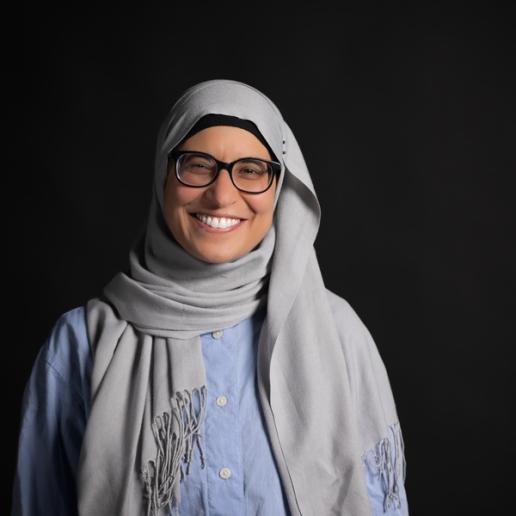
La professeure Loubna Belaid est spécialiste de la recherche participative, de l’évaluation de programmes et de l’analyse des politiques publiques dans des contextes marqués par des inégalités sociales, des asymétries de pouvoir et des transformations institutionnelles. Ses travaux portent sur les déterminants structurels et institutionnels des situations d’exploitation et de désavantage social, ainsi que sur les réponses publiques, communautaires et organisationnelles mises en place pour y faire face.
Son parcours universitaire et professionnel l’a amené à travailler sur des enjeux de santé et de politiques sociales, tant au Canada qu’à l’international. La chercheuse a mené des recherches participatives et des évaluations en Afrique subsaharienne, notamment en Ouganda, au Soudan du Sud, au Nigeria, au Burkina Faso, au Sénégal et en Guinée, ainsi qu’en Jordanie et au Québec (contexte autochtone).
Sa programmation de recherche s’intéresse aux différentes formes d’exploitation des personnes, dont l’exploitation sexuelle, le travail des enfants et d’autres formes d’exploitation économique et sociale. Elle analyse les trajectoires sociales et institutionnelles associées aux situations d’exploitation, ainsi que les mécanismes structurels, relationnels et organisationnels qui contribuent à leur émergence, à leur maintien ou à leur transformation, notamment dans des contextes de crise et de changements environnementaux.
Les travaux de Loubna Belaid s’inscrivent dans une perspective de coconstruction des connaissances et des interventions avec les acteurs concernés et mobilisent des approches participatives et décoloniales, afin de produire des connaissances empiriquement ancrées sur les conditions sociales et institutionnelles qui façonnent les trajectoires d’exploitation.
Expertises
-
Évaluation de programmes
-
Recherche participative
-
Analyse de genre
-
Lutte contre l’exploitation (exploitation sexuelle, travail forcé, travail des enfants)
-
Santé mondiale
-
Recherche en contexte de crise humanitaire
Activités d'enseignement
Formation universitaire
Université de Montréal
Montréal, Canada
Publications
Liste des publications des 5 dernières années
-
Maillet, L., Bayard, C., Belaid, L., Bentayeb, N., Flores, J. A., Garakani, T., Goudet, A., Malham, S. A., Ruelland, I., & Touati, N. (2026). Environmental scan to inform decision-making in the implantation of a sexual health services for vulnerable groups in Montreal. International Journal of Integrated Care, 26(S1).
-
Belaid, L., Garakani, T., & Maillet, L. (2025). La sécurisation culturelle est-elle suffisante pour prévenir le racisme systémique et réduire les iniquités en santé ? Regard critique sur le projet de loi 32. Santé Publique, 37(1), 53‑58.
-
Cockcroft, A., Belaid, L., Omer, K., Ansari, U., Aziz, A., Gidado, Y., Mudi, H., Mohammed, R., Sale, R., & Andersson, N. (2025). The Equity Impact of Universal Home Visits to Pregnant Women and Their Spouses in Bauchi State, Nigeria : Secondary Analysis From a Cluster Randomised Controlled Trial. Community Health Equity Research & Policy, 45(2), 141‑151.
-
Sarmiento, I., Rojas-Cárdenas, A., Zuluaga, G., Belaid, L., Cockcroft, A., & Andersson, N. (2024). Experimental studies testing interventions to promote cultural safety, interculturality or antiracism in healthcare : Protocol for a systematic review. BMJ Open, 14(1), e077227.
-
Belaid, L., Mudi, H., Omer, K., Gidado, Y., Ansari, U., Rilwanu, M., Andersson, N., & Cockcroft, A. (2024). Promoting gender equity in a home visits programme : A qualitative study in Northern Nigeria. BMC Women’s Health, 24(1), 469.
-
Belaid, L., Sarmiento, I., Dion, A., Cardenas, A. R., Cockcroft, A., & Andersson, N. (2024). Factors Influencing Domestic Human Trafficking in Africa : Protocol for a Scoping Review. JMIR Research Protocols, 13(1), e56392.
-
Belaid, L., Sarmiento, I., Dion, A., Pimentel, J. P., Rojas-Cárdenas, A., Cockcroft, A., & Andersson, N. (2023). How does participatory research work : Protocol for a realist synthesis. BMJ Open, 13(9), e074075.
-
Belaid, L. (2023). Sécurisation culturelle. Dans A. Revillard (dir.), Méthodes et approches en évaluation des politiques publiques (p. 319-335). Éditions science et bien commun.
-
Belaid, L., Budgell, R., Sauvé, C., & Andersson, N. (2022). Shifting paradigm from biomedical to decolonised methods in Inuit public health research in Canada : A scoping review. BMJ Global Health, 7(11), e008311.
-
Belaid, L., Sarmiento, I., Dimiti, A., & Andersson, N. (2022). Community Participation in Primary Healthcare in the South Sudan Boma Health Initiative : A Document Analysis. International Journal of Health Policy and Management, 11(12), 2869‑2875.
-
Cockcroft, A., Omer, K., Gidado, Y., Mohammed, R., Belaid, L., Ansari, U., Mitchell, C., & Andersson, N. (2022). Impact-Oriented Dialogue for Culturally Safe Adolescent Sexual and Reproductive Health in Bauchi State, Nigeria : Protocol for a Codesigned Pragmatic Cluster Randomized Controlled Trial. JMIR Research Protocols, 11(3), e36060.
-
Tonkin, K., Silver, H., Pimentel, J., Chomat, A. M., Sarmiento, I., Belaid, L., Cockcroft, A., & Andersson, N. (2021). How beneficiaries see complex health interventions : A practice review of the Most Significant Change in ten countries. Archives of Public Health, 79(1), 18.
-
Belaid, L., Ansari, U., Omer, K., Gidado, Y., Baba, M. C., Daniel, L. E., Andersson, N., & Cockcroft, A. (2021). “I had to change my attitude” : Narratives of most significant change explore the experience of universal home visits to pregnant women and their spouses in Bauchi State, Nigeria. Archives of Public Health, 79(1), 202.
-
Belaid, L., Atim, P., Atim, E., Ochola, E., Ogwang, M., Bayo, P., Oola, J., Wonyima Okello, I., Sarmiento, I., Rojas-Rozo, L., Zinszer, K., Zarowsky, C., & Andersson, N. (2021). Communities and service providers address access to perinatal care in postconflict Northern Uganda : Socialising evidence for participatory action. Family Medicine and Community Health, 9(2), e000610.
-
Belaid, L., Atim, P., Ochola, E., Omara, B., Atim, E., Ogwang, M., Bayo, P., Oola, J., Okello, I. W., Sarmiento, I., Rojas-Rozo, L., Zinszer, K., Zarowsky, C., & Andersson, N. (2021). Community views on short birth interval in Northern Uganda : A participatory grounded theory. Reproductive Health, 18(1), 1-11
-
Belaid, L., Ochola, E., Bayo, P., Alii, G. W., Ogwang, M., Greco, D., & Zarowsky, C. (2021). Exploring the impact of a community participatory intervention on women’s capability : A qualitative study in Gulu Northern Uganda. BMC Women’s Health, 21(1), 28.
-
Mudi, H., Dutse, U., Belaid, L., Ansari, U., Omer, K., Gidado, Y., Baba, M. C., Mahdi, A., Andersson, N., & Cockcroft, A. (2021). Impact of home visits to pregnant women and their spouses on gender norms and dynamics in Bauchi State, Nigeria : Narratives from visited men and women. Global Health Promotion, 28(3), 59-65.
-
Bayo, P., Belaid, L., Tahir, E. O., Ochola, E., Dimiti, A., Greco, D., & Zarowsky, C. (2020). « Midwives do not appreciate pregnant women who come to the maternity with torn and dirty clothing » : Institutional delivery and postnatal care in Torit County, South Sudan : A mixed method study. BMC Pregnancy & Childbirth, 20(1), 1‑14.
-
Belaid, L., Bayo, P., Kamau, L., Nakimuli, E., Omoro, E., Lobor, R., Samson, B., & Dimiti, A. (2020). Health policy mapping and system gaps impeding the implementation of reproductive, maternal, neonatal, child, and adolescent health programs in South Sudan : A scoping review. Conflict and Health, 14(1), 20.
-
Belaid, L., Benoit, M., Kaur, N., Lili, A., & Ridde, V. (2020). Population Health Intervention Implementation Among Migrants With Precarious Status in Montreal : Underlying Theory and Key Challenges. SAGE Open, 10.
-
Camara, B. S., Belaid, L., Manet, H., Kolie, D., Guillard, E., Bigirimana, T., & Delamou, A. (2020). What do we know about patient-provider interactions in Sub-Saharan Africa? A scoping review. Pan African Medical Journal, 37.
-
Bayo, P., Alobo, G., Feyissa, G. T., & Belaid, L. (2019). Mothers’ perceptions of the practice of kangaroo mother care for preterm neonates in sub-Saharan Africa : A qualitative systematic review protocol. JBI Evidence Synthesis, 17(8), 1558.
-
Delaunay, V., Douillot, L., Rytina, S., Boujija, Y., Bignami, S., Ba Gning, S., Sokhna, C., Belaid, L., Fotouhi, B., Senghor, A., & Sandberg, J. (2019). The Niakhar Social Networks and Health Project. MethodsX, 6, 1360-1369.
-
Sandberg, J., Park, C., Rytina, S., Delaunay, V., Douillot, L., Boujija, Y., Gning, S. B., Bignami, S., Sokhna, C., Belaid, L., Diouf, I., Fotouhi, B., & Senghor, A. (2019). Social learning, influence, and ethnomedicine : Individual, neighborhood and social network influences on attachment to an ethnomedical cultural model in rural Senegal. Social Science & Medicine, 226, 87-95.
Bottin